
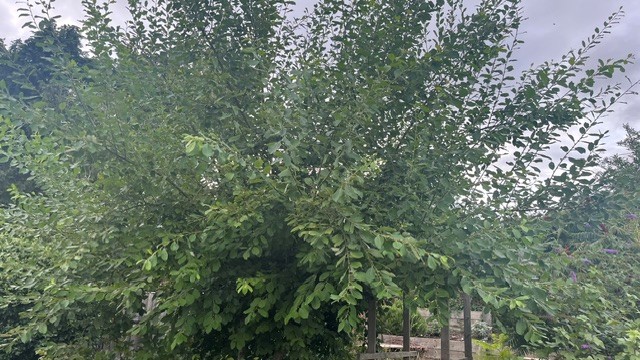
I’m not a gardener. My partner and her mother, however, are keen gardeners, and recently I listened to them discussing what to do with the goat willow in our garden. Their conversation wasn’t simply about which branches to cut off. They had a picture of what they wanted it to look like afterwards, how it should complement the rest of the garden and where they needed to let more light through so other plants could flourish. They were also conscious of doing it carefully so they didn’t damage the willow itself.
They started with what they were trying to create and then decided what needed to go. It struck me that there was a pretty good lesson in business strategy sitting in our garden.
New initiatives need space to succeed
When senior leadership teams talk about growth and strategy, the conversation naturally tends to focus on what they should do next. What new markets should we enter? What products or services should we develop? What new initiatives will help us achieve our ambitions?
The problem comes when each answer results in another initiative being added to everything the business is already doing. The same leaders and people are expected to deliver more priorities with broadly the same resources. Eventually, good initiatives can fail, not because they were the wrong initiatives, but because they were never given the capacity and attention they needed to succeed.
One of the things I often say when working with senior leadership teams is that new initiatives need space to succeed. Creating that space can require some difficult choices.
Case story: The strategy was clear. Now came the hard part.
I worked with one business where the senior team had developed a clear vision and strategy. We then challenged ourselves to work out what it would actually take to deliver it. How much money, internal resource and management capacity would need to be committed to the strategic initiatives?
Having worked that out, we then had to find those resources from within the business. That was tough because it meant looking at existing projects and priorities and deciding what could be stopped or reduced. It wasn’t primarily about identifying things that were failing or obviously wasteful; those are relatively easy decisions. The difficult choices were between activities that were delivering some value and the new priorities that were more important to the future.
Agreeing what they wanted the future to look like was important, but they also had to create the capacity to make it happen.
Case story: Why stop it if it’s working?
I saw this even more clearly with another business owner and his senior leadership team. The company had a long-established product line which was no longer sufficiently profitable, and they had launched a project to reduce its costs and return it to profitability. Importantly, the project was working. Costs were coming down and the team could demonstrate real progress.
However, when we looked at the product through the lens of the future vision and strategy, a different picture emerged. Even if the project achieved its objectives, the product was unlikely to deliver the level of gross profit the business required in the future and was no longer core to the future product strategy. Keeping it going was also taking up management time, some of the best people in the business and valuable factory space, all of which were needed for the new product lines.
On paper, perhaps the decision sounds obvious. In reality, it wasn’t. The company had produced the product since it was founded and the owner had a strong emotional connection with it. It was, in many ways, his “baby” and part of the history and identity of the business.
They eventually decided to wind down the product line and stop the improvement project that was actually delivering results. This freed up some of their best people, released management capacity and created the factory space needed for the new product lines.
That experience reinforced something for me: the hardest things to prune are rarely those that are failing. They are the things that are still delivering some value, but not enough to justify the resources they take away from the future.
Strategic pruning isn’t cost cutting
This is where I think the gardening analogy is useful. My partner and her mother weren’t trying to make the goat willow smaller for the sake of it. They knew what they wanted the garden to look like and were making deliberate choices about what should stay and what should go, so that the willow and the plants around it could flourish.
Strategic pruning is therefore very different from cost cutting. The question isn’t simply, “Where can we spend less?” It is, “What are we prepared to stop so that the things that matter most have a better chance of succeeding?”
Clear Vision & Strategy is the first of my Four Growth Levers, and making choices about what not to do is an important and sometimes overlooked part of it. Without a clear picture of the business you are trying to create, almost every existing project, product and activity can be justified.
So perhaps there are three questions worth taking into your next senior leadership meeting:
- What will delivering our vision and strategy actually require in terms of money, people, leadership attention and capacity?
- What are we currently doing that consumes those resources but isn’t sufficiently important to the future we are trying to create?
- And, perhaps most difficult of all, what are we emotionally attached to that we might make a different decision about if we were starting the business today?
Growth doesn’t always come from adding more. Sometimes we need to be very clear about what we want to grow, and then have the courage to create the space for it.
Because: New initiatives need space to succeed.
Back to News & Blogs Overview